Tuesday, 7 June 2011

Polytunnel News

Room with a view-Land Matters, South Devon
One month......That's how long I haven't posted anything on this blog. It's been a very busy couple of weeks, we have been  preparing for the London Green Fair and are now getting ready for the open square weekend taking place this coming weekend. Our sign is almost ready and we have been trying our hand at making elder flower juices and wines. For the pass week I have been staying at a self sustaining community in south Devon called Land Matters. I had an amazing time living off grid, bathing in the stream, fresh goats' milk every morning, and I learnt alot about community life. We spent a week down in Devon and are now back in busy London trying to get the May Project site ready for our open garden square visitors.
The polytunnel has  finally been repaired, well the tears have been covered up and this has really helped with the number of snails and slugs we have had. It is now fully planted up and looking amazing, it has been so dry the pass few weeks that we have had to be watering it almost everyday. Thanks heavens as I am writing this blog the rain is falling has been falling for almost 24 hours straight. Its a good thing too cause while I was away it only rained enough to just wet the surface of the ground so when I returned the plants were looking a bit droopy. We have planted some very thirsty plants inside the polytunnel and will have to keep a very close eye on them if the dry sunny days return. We have planted the usual heat loving plants inside the polytunnel this season. We have got an  entire bed devoted to sweet and hot peppers and so far they are all doing very well.
Hot and sweet peppers three (3) month old.

Last year we had only two large beds running down the sides in the polytunnel and got a good enough yield for the space used but this design left a large bit of unused space down the centre. So this season we put in two L-shaped beds running down the sides and a straight bed running down the centre. We are playing with the idea of using the vertical space we have inside the polytunnel, we may attempt hanging baskets or suspended grow beds using grow-bags. We have built bamboo trellises to try and train the squashes, gherkins and our last surviving melon to grow vertically.
 Gherkins(back), Butternut Squash(middle) and Melon(foreground).

Squash Festivals.

The two most famous plants planted under a polytunnel in London, I think, are tomatoes and aubergines and we have got them both in abundance. Last season we had a good crop of tomatoes but our aubergines did not do as well as expected. We were able to get two from three plants and so this season we have planted quite a bit more, with this and our improved soil we are hoping to get a better yield this time around.
 Two varieties of tomatoes.

Lots and lots of aubergines. 

Our lemon balm just keeps on coming. This is its second season and no matter how much we harvest off of it it keeps on coming back for more. Its a fantastic plant and gives the polytunnel a nice citrus aroma, very much appreciated especially after feeding the soil with our home-made 'Netfrey Tea' plant fertilizer.
Lemon Balm a few days after cutting

As always, there are seedlings coming up in the nursery. We have got chives, leeks, some sweet and hot peppers and we are trying to grow some hibiscus which have not yet taken. That's all that happening under the polytunnel so far and it all looks very promising. We should have a very very good harvest this year, fingers crossed.

Monday, 9 May 2011

Rain Dance

It's been a dry couple of weeks and it had started to show on the May Project Gardens site. Our rain water storage is only 400lts and that's enough to only water the entire site once. We need a bigger rain water storage tank. If we are able to collect and store more rain water we will greatly reduce the amount of tap water used in the garden during dryer periods. But it's not all bad news, it rained two days ago and there is a slightly different feel to the garden. It's a lot cooler for one and most of the insects which were hanging out in the garden the past few days have moved on. 
Although its' been dry there has been a lot of growth and all sections of the site have been putting on a show for spring. The kitchen garden space consisting of salad leaves and herbs is very lust and we have already started harvesting off of it, just this morning I had a nice cup of peppermint tea.
Kitchen Garden with salad leaves and herbs

The main crop space is also in full swing. The beans are doing better than they were last season and the black flies and aphids have not been that much of a problem yet. Our potatoes and garlic shares the same space and are also coming on very nicely.
 Beans, potatoes and garlics

The second main crop bed consists of carrots, onions, French beans, squashes, and sweet corns. We are attempting to train the squashes to climb up a home made trellis made of reused bamboo canes which were originally used as a screen.
 Second main crop bed

We timed the rain perfectly this week. The evening before the rain came we added the home-made fertilizer to the beds and the rain made sure it got soaked into the soil. The fertilizer is made on site and using only natural sustainable ingredients: 3 part comfrey, 1 part nettles, and enough water to just cover the comfrey and nettles. The technique we use is to press/crush the comfrey and nettle leaves and then add a bit more water and cover from rain, and  I like to add a few different natural stones just because they release minerals as they slowly dissolve, and these minerals are loved by plants, and they act as weight to keep the leaves submerged. In two to three weeks all the leaves would have almost vanish leaving a  have concentrated liquid plant feed.   
 The beginning stages: crushed leaves and water

We call it 'Nettfrey Tea'

We are also making compost. We have got hundreds of thousands of workers on the composting site, we compost with worms and other soil inhabiting creatures. Our worms are doing a great job this year, the soil they have been building is very rich and has very good texture. We also have a hot composting bin, this was filled up with alternating layers of green (nitrogen rich) materials and brown (carbon rich) materials and a splash of diluted Nettfrey Tea, covered and left for a few months, turning once or twice a month. This season we are adapting techniques used in the Quick Return compost making method developed by Ms. Maye E. Bruce in the 1950's, we hope to be composting more in the coming seasons using her techniques. 
 Yummy worm compost

Newly built compost heap

Other originally built compost bins have now been used as storage for material collected from the garden that were either too big or not ready to be used for composting. To be perfectly honest, it's turning into a bit of a tip, we will be investing in a shredder soon I suspect.
Storage piles

Our strawberries have filled out there bed these past few weeks and so has our little wild space behind the polytunnel.
Strawberries--------------------The wild bunch

Another wild space which has had a good couple of weeks is the pond area. All the plants which we added to the site are doing really well. We have seen newt-lets, tadpoles, boatman, snails, and other creatures hanging out in the pond and we have had loads of visits from a numerous amount of insects which in turn attracts the birds that do take the occasional swim.
Wildlife pond space
Elder overlooking the pond

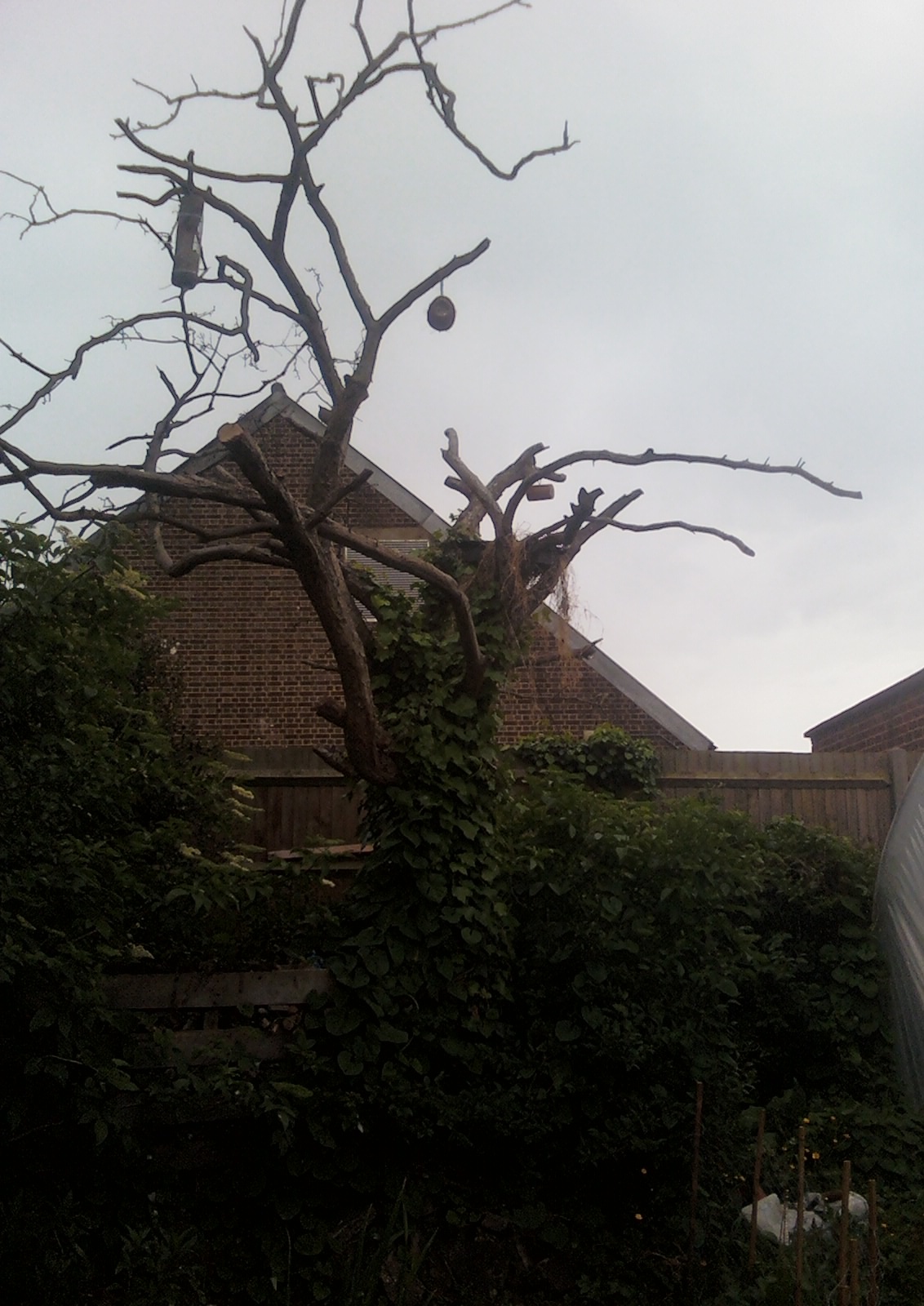
I must admit, the insects are not the only reason the birds visit our garden. We have turned one of our trees into a feeding station for their enjoyment and we have also added in a bird bath in the tree for those birds that don't like coming down to ground level.
   'Dead Tree'

We have started work on the front garden, we cleared a small spot and planted in some sunflowers. Last year we had 10ft tall red, yellow and pinkish-white sunflowers, fingers crossed we will beat our record this year.
Sunflowers out front

Remember the meadow I wrote about in the last post? It's actually taking shape very nicely. The grasses have shot up and quite alot of the flowers have started growing their first set of true leaves.
 Wild flower meadow

That's all for now but next time I will take you into the polytunnel and share with you how we make our elder flower champagne. Until then happy gardening. 

Friday, 15 April 2011

Blooming Lovely

Hey folks. It's been a short wile but things have been moving along quite well here at May Project Gardens. The Majority of the plants have sprung up and the fruit trees are in full bloom. We are attempting to add a small wild flower meadow to the garden which is said to be good for attracting both birds and insects. It might be a bit late in the season for sowing wildflowers but we are hopeful most will germinate. I will talk more about the wild meadow later on down the line. I have spent a few night tenting in the garden under the grand apple tree and there has been an almost deafening buzz over head. I am so glad to see evidence of so much bee activity this year.
  The apple tree in all her glory

The kitchen garden aka "the salad bar" has been doing very well so have the main crop garden. We still have not been able to repair the damage caused to the polytunnel be Mr fox, and as a result we have not yet transplanted the tomatoes, aubergines, and the like. We hope to have that done by the end of next week. 

Onions, Carrots and Goose berries

 Broad beans, Potatoes, and Garlics.

We've got tadpoles. Hard to believe but we only just started to see tadpoles and newt-lets swimming around our pond. The pond is barely two months old and the diversity of life already present is nothing short of amazing. To be honest though, I cheated a  bit. On one of my camping trips to Essex I acquired some frog spawn and pond weed and filled a 1.5lt water bottle with water from an already established pond and added them to the May pond and they have all taken nicely to their new home.  
Our strawberry plants have also began flowering and we expect a good harvest this year. The strawberries, being perennials, are also part of the food forest we are attempting to create. We also added some peppermint, which was left over from last years' harvest, into the mix. We are now discussing ground cover options and climbers for later on as the forest matures.

Mint and Strawberries on the edge of the food forest site.

Young Black and Red Currents

Young Apple

Young Cherry

That's pretty much all the updates I have for now. In the coming weeks, as the weather continues to warm we will be visiting some other community projects going on around our area, and we will also be looking at ways increasing our energy efficiency and looking to install a irrigation system for atleast part of the garden.